The Encyclopedia of Popular Herbs
Excerpt
The following information on Milk Thistle is from The Encyclopedia
of Popular Herbs, Your Complete Guide to the Leading Medicinal
Plants. The book was published by Prima Health (Copyright
2000). The authors are Robert S. McCaleb, Evelyn Leigh, and
Krista Morien.
Dr. Andrew Weil says of the book, Both practitioners
and patients will find this guide to popular herbal remedies
useful. It is authoritative and readable.Christopher
Hobbs, L.Ac, and renowned herbalist and author says, Of
all the many recent books on herbal medicine, The Encyclopedia
of Popular Herbs stands out as the one that is the best blend
of evidence-based, rigorously researched herbal medicine,
along with specific and practical guidelines for 21st century
home health care.
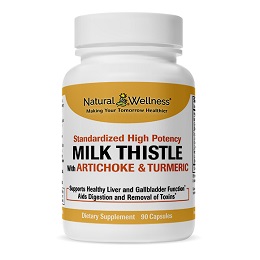
Milk Thistle
Silybum Marianum Asteracae
PART USED: Seed
PRIMARY USES
Liver health
Protection against harmful chemicals, drugs, and pollution
Digestive aid
Acute and chronic hepatitis
Alcoholic and other liver damage
Gallbladder symptoms
Prickly thistles may not be as approachable as
softer plants, but appearances can be deceiving. Not only does
this group of plants contain no poisonous members, but many
thistles have the ability to protect our livers against harmful
substances, including poisons present in our daily environment.
The thistle that stands out most in this regard is Milk Thistle.
This remarkable plant has earned a worldwide reputation as
an antioxidant and liver protectant that can even help repair
and regenerate injured liver cells.
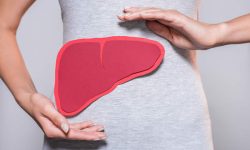
As the word liver suggests, maintaining the health
of this essential organ is key to the overall quality of life.
The liver, the body's second largest organ, processes nutrients,
drugs, toxins, and any other substance entering the body through
the intestines, lungs, or skin. Savvy Europeans have long
recognized this, taking Milk Thistle extract as a daily form
of health insurance against pollution, over-the-counter drugs
such as acetaminophen, and even the self-inflicted damage
of overindulgence in rich foods and alcohol. In Germany, Milk
Thistle extracts accounted for over $180 million in herb product
sales during 1998.
Health practitioners also prescribe Milk Thistle to treat
a variety of problems you might not normally connect with
liver health, including poor digestion, female hormonal problems,
constipation, mood disorders, hemorrhoids, varicose veins,
atherosclerosis (hardening and narrowing of the arteries),
and skin conditions such as psoriasis and acne. Today, regular
use of Milk Thistle extract can be considered a modern necessity
every bit as important as a healthful diet, exercise, rest,
and the most common vitamin supplements.
Top
HISTORY
Milk thistle has been used to support liver health for more
than 2,000 years. As early as A.D. 23, Pliny the Elder recommended
a mixture of Milk Thistle juice and honey for improving digestion
by stimulating the flow of bile. During the sixteenth century,
the British herbalist Gerard called Milk Thistle the
best remedy that grows against all melancholy diseases.
Melancholy (what we might call depression today) gets its
name from the Greek words for black bile and was
historically treated with liver herbs as well as mood-enhancing
plants. During the seventeenth century, British herbalist
Nicholas Culpeper prescribed Milk Thistle seeds for jaundice
(yellow discoloration of tissues due to excessive amounts
of bile), gallstones, and obstructions of the liver and spleen.
Milk thistle became popular in American medicine around the
turn of the twentieth century, when the Eclectic physicians
(a prominent group of American doctors who practiced at that
time) adopted it as a treatment for varicose veins, menstrual
problems, and liver and kidney ailments. The plant gradually
fell out of favor later in the centuryexcept in Germany,
where herbs have always enjoyed widespread acceptance. During
the 1970s and 1980s, German scientists began testing the plant
to validate its many centuries of application as a liver herb.
Today, Milk Thistle is a popular treatment in Germany for
many liver problems, including hepatitis and cirrhosis. Intravenous
silymarin (a complex of important Milk Thistle constituents)
is also a life-saving emergency room treatment used throughout
Europe in cases of poisoning.
Like its cousin the globe artichoke (Cynara scolymus), Milk
Thistle has a long history as a delicious and nutritious food.
When boiled, young Milk Thistle flowerheads look and taste
much like a savory artichoke. All parts of the plant are edible,
including the roots and young stalks and leaves. To incorporate
the benefits of Milk Thistle seeds into your daily diet, herbalist
Christopher Hobbs suggests making a seasoning salt by soaking
Milk Thistle seeds overnight, draining the water, grinding
the seeds into a powder using a coffee grinder, lightly toasting
them in the oven, and then mixing them with salt or other
spices.1 Milk thistle seeds are high in protein and the essential
fatty acid linoleic acid, a healthy fat that can help reduce
chronic inflammation, balance the female menstrual cycle,
and improve heart health.
Top
INTERNATIONAL STATUS
Milk thistle seeds are approved in the German Commission
E Monographs as a supportive treatment for inflammatory liver
conditions such as cirrhosis, hepatitis, and fatty infiltration
caused by alcohol and other toxins.2
Top
BOTANY
Herbalist Michael Moore describes Milk Thistle as a
bulldog with a spiked collar because of the plant's
prickly appearance. The plant grows to heights of 5 to 10
feet and is dangerous looking-right down to the sharp spines
on its reddish purple flowers. Milk thistle's common name
comes from the white markings on the leaves, its milky white
sap, and its traditional use by nursing mothers to increase
lactation. The humble plant is closely related to other common
thistles, including blessed thistle (Cnicus benedictus), which
has similar medicinal properties but is not as well researched.
Milk thistle is native to Europe, southern Russia, Asia,
and North Africa. When the English colonists brought it to
North America, the plant quickly became a common weed in many
parts of the United States. Today, large fields of Milk Thistle
are cultivated in Texas and Argentina, with an eye toward
developing cultivation methods that yield the highest amounts
of silymarin. If you decide to grow Milk Thistle in your own
garden, watch out! The plant lives up to its reputation as
a weed, spreading easily on its many parachute-like seeds.
Milk thistle is an annual or biennial and favors sunny locations
and well-drained soils, though it generally tolerates harsher
conditions. The seeds can be harvested in July or August after
the flowers have blossomed.
Top
BENEFITS
Protects the liver from damage by guarding liver cell membranes
Acts as a powerful antioxidant in the liver, stomach, and
intestines
Helps repair and regenerate liver cells by stimulating protein
synthesis
Aids digestion and elimination by stimulating the flow of
bile (needed to break down fats)
Top
SCIENTIFIC SUPPORT
One of the best-studied herbs, Milk Thistle has been the subject
of more than 300 clinical and laboratory trials. In cases
of acute hepatitis, Milk Thistle extract helps people recover
more quickly and prevents the condition from becoming chronic.
Improvement is often apparent within 5 days, and even greater
benefits are seen after 3 weeks. Milk thistle is also useful
for treating chronic hepatitis when taken over a period of
3 to 12 months. Studies show that it can help reverse liver
cell damage, normalize elevated levels of liver enzymes, and
improve symptoms such as abdominal discomfort, decreased appetite,
and fatigue. Standard therapy for hepatitis usually involves
the drug alpha-interferon, which has many unpleasant side
effects, including flu-like symptoms, fatigue, and irritability.
Research has also demonstrated that Milk Thistle can slow
the advancement of cirrhosis (chronic liver damage) and increase
life span in people with cirrhosis, particularly alcoholics.
Preliminary research shows that Milk Thistle may help prevent
gallstones by reducing cholesterol levels in the bile. In
one study, a daily dose of 420 mg of silymarin taken for I
month led to a reduction of bile cholesterol in people with
a history of gallstones and gallbladder surgery. 3
Exciting breakthrough research suggests possible antioxidant
benefits in another area: non-melanoma skin cancer. A number
of preliminary laboratory investigations indicated that silymarin
could reduce the rate of tumor formation and tumor size at
all three stages of development-initiation, promotion, and
complete carcinogenesis. Silymarin's effects were most dramatic
in the later stages of skin cancer. Clinical studies are necessary
to determine how these results apply to humans. 4
Another area of current research is Milk Thistle's possible
anti-allergenic effects. In vitro research indicates that
silymarin and silybin may help prevent allergic reactions
by inhibiting the release of histamine from mast cells in
animals and from blood basophils in humans.
Top
SPECIFIC STUDIES
Liver Protection:
Clinical
Study (1994)
Silymarin provided protection against the toxic effects of
long-term treatment with psychotropic drugs (used in mental
illness) in a randomized, double-blind, placebo controlled
clinical study of 60 people. Before the study began, all of
the participants had been taking the psychotropic drugs phenothiazine
or butyrophenone, or both, for at least 5 years. Subjects
were divided into four groups for the 3-month trial: group
I took psychotropic drugs and a high dose of silymarin (800
mg per day), group 11 took psychotropics with placebo, group
III took silymarin only (800 mg per day), and group IV took
placebo. Silymarin provided liver protection to group I by
reducing blood levels of malondialdehyde (MDA), an indicator
of liver damage that increases during long-term treatment
with psychotropics. Not surprisingly, the decrease in MDA
levels was even greater in the group taking silymarin alone
(group III ). Patients in group II continued to experience
rising levels of MDA, whereas those who took placebo had declining
MDA levels until the psychotropics were reinstated. There
were no adverse effects associated with Milk Thistle treatment.
6
Active Cirrhosis:
Clinical
Study (1992)
Silymarin was just as effective as the bile acid ursodeoxycholic
acid (UDCA) in improving symptoms of active cirrhosis in a
randomized, controlled, crossover study involving 21 people.
During the 6-month trial, subjects took either 420 mg of silymarin
or 600 mg of UDCA daily. In the UDCA group, liver function
improved significantly, measured as a 30 percent drop in serum
aspartate amino transferase (AST) levels and a 22 percent
drop in alanine amino transferase (ALT) levels. Serum levels
of gamma-glutarnyltranspeptidase (y-GT) also demonstrated
a beneficial decline. Those in the silymarin group had a 15
percent drop in AST and a 23 percent decline in ALT levels,
with no change in y-GT levels.
During the second half of the study, 20 of the 21 original
participants took either combined treatment (UDCA and silymarin)
or no treatment. Combination therapy caused a beneficial decrease
in liver enzymes over a 12-month period. On the other hand,
those who received no treatment experienced a rise in mean
levels of serum transminases and y-GT, similar to pretreatment
values. No side effects were reported for UDCA or silymarin.
Lastly, researchers tested UDCA in relation to hepatitis
C virus (HCV). They found that UDCA was not as effective in
lowering ALT and AST levels in people who were positive for
anti-HCV antibodies, compared to those who were negative for
these antibodies. The researchers concluded that both UDCA
and silymarin are safe and effective in treating active cirrhosis
of the liver. However, UDCA treatment should be restricted
to people who test negative for anti-HCV antibodies. 7
Cirrhosis:
Clinical
Study (1989)
Long-term treatment with silymarin significantly increased
survival rates in a randomized, double-blind, placebo-controlled
study of 105 people with cirrhosis. Subjects took either 420
mg of silymarin daily or placebo during the study, which lasted
for approximately 41 months. Over a 4-year period, the mortality
rate in the placebo group was twice that of the silymarin
group. Silymarin showed the greatest benefit in those with
alcohol-related cirrhosis. There appeared to be no difference
in the results of liver function tests (transminases, bilirubin,
SGGPT, and other liver enzymes) between the two groups. No
side effects were reported.8
How It Works:
Milk thistle prevents toxins from entering the liver by guarding
the organ's numerous doorways-the membranes of liver cells.
By slowing the rate at which the liver absorbs harmful substances,
the toxins are excreted through the kidneys before they can
cause liver damage.9 The most dramatic example of this is
Milk Thistle's ability to block poisons from the deathcap,
mushroom (Amanita phalloides), one of the most notorious liver
toxins known to humans. In a group of 49 patients with Amanita
poisoning, physicians rated the results amazing
and spectacular, after patients were given injections
(20 mg/kg daily) of silybin, a major constituent in Milk Thistle.
All of the patients survived, even though they were treated
24 to 36 hours after poisoning, when liver and kidney damage
had already occurred. The death rate in emergency rooms from
Amanita poisoning is usually 30 to 40 percent.8 Milk thistle
acts in a similar fashion to detoxify other synthetic chemicals
that find their way into our bodies, from acetaminophen and
alcohol to heavy metals and radiation.9
Much of Milk Thistle's protective effect is due to the flavonoid
complex silymarin, which acts as a powerful antioxidant, combining
with and thus neutralizing harmful free radicals that result
from normal metabolic processes and from the breakdown of
toxic substances. At least 10 times as potent as vitamin E,
silymarin also helps increase levels of two additional antioxidants,
glutathione and superoxide dismutase (SOD).11 A laboratory
study showed that silymarin may increase glutathione content
in the liver and intestines by up to 50 percent.12 Silymarin
also increases the activity of SOD in erythrocytes (red blood
cells) and lymphocytes (white blood cells) formed in the lymphatic
tissue in patients with liver disease.13 Because silymarin
is a potent antioxidant in the stomach and intestines, it
may also have a role to play in treating inflammatory conditions
such as colitis and ulcers. 14
When damage has already been done, Milk Thistle aids the
liver in repairing injured cells and generating new ones.
It does this by stimulating protein synthesis through the
enzyme RNA polymerase I. Protein is a basic building block
of cell walls, cell structures, and enzymes that are vital
to all body processes. Recent evidence (molecular modeling)
suggests that the constituent silybin may be responsible for
stimulating protein synthesis, because it imitates a steroid
hormone. Silybin increases protein synthesis by up to 25 to
30 percent, compared with controls.9 Milk thistle's regenerative
ability is essential for treating serious conditions such
as chronic hepatitis, cirrhosis, and toxic fatty deposits
in the liver.
Recent evidence suggests that silymarin may be just as important
for kidney health. Silymarin concentrates in kidney cells,
where it aids in repair and regeneration by increasing protein
and nucleic acid synthesis. One study showed that it increased
cell replication by 25 to 30 percent. 9
Of the many compounds that make up the silymarin complex,
silybin and silychristin are the two most potent ones, according
to current pharmacological studies.9
Unfortunately, these compounds are relatively poorly absorbed
by the gastrointestinal tract. Some studies suggest an absorption
rate of just 20 to 50 percent, which explains why it is so
important to take standardized Milk Thistle extracts to ensure
high concentrations of the active ingredients.15
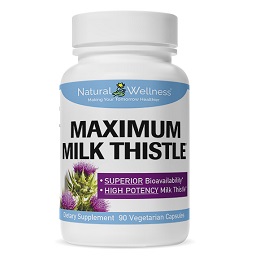
Some manufacturers claim that combining Milk Thistle with
phosphatidylcholine increases absorption.
(Note from webmaster: this is
the form found in Maximum Milk Thistle at http://www.LiverSupport.com.
Check the clinical
studies on the site for more information.)
Top
MAJOR CONSTITUENTS
Silymarin (a flavonoid complex that includes silybin, silychristin
and silydianin)
Top
SAFETY
Milk thistle has been safely used as a food herb and medicine
for centuries.
Side effects: No side effects have been reported during clinical
trials. Milk thistle may initially have a mild laxative effect
in certain people because of its stimulating effects on bile
secretion.2
Contraindications: Milk thistle is considered safe for use
during pregnancy and has a long history of use by nursing
women.16 People with diabetes who are taking Milk Thistle
should carefully monitor their blood glucose and may require
reduction in standard antihyperglycemic agents.
Drug interactions: None known.
Top
DOSAGE
Standardized milk thistle products are strongly recommended
to ensure therapeutic levels of silymarin. There is no research
on Milk Thistle as a tincture or tea. In any case, Milk Thistle
does not make an effective tea because the main constituents
do not dissolve easily into water. For maintaining overall
health, begin with the full dosage of Milk Thistle for 6 to
8 weeks, followed by a reduction to 280 mg daily. Those with
liver problems should continue the full dosage for at least
4 to 8 weeks. Long-term therapy may be required in serious
or chronic cases.
Standardized capsules/ tablets: 420 mg silymarin, divided
into two to three doses a day
Tincture (unstandardized): 10 to 25 drops up to three times
a day
Top
STANDARDIZATION
Milk thistle is typically standardized to contain 70 to 80
percent silymarin.
Top
REFERENCES
1 . Hobbs C. Milk Thistle: The Liver Herb. Capitola, CA: Botanica
Press, 1992.
2. Blumenthal M, Busse W Goldberg A, eds.The Complete German
Commission E Monographs. Austin, TX: American Botanical Council;
Boston: Integrative Medical Communications, 1998.
3. Nassuato G, lemmolo RM, Strazzabosco M, et al. Effect
of silybinin on biliary lipid composition: experimental and
clinical study. Journal of Hepatology 1991; 12(3): 290 295.
4. Katiyar SK, Korman NJ, Mukhtar H, et al. Protective effects
of silymarin against photocarcinogenesis in a mouse skin model.
Journal of the National Cancer Institute 1997; 89(8): 556-566.
5. Miadonna A, Tedeschi A, Leggieri E, et al. Effects of
silybin on histamine release from human basophil leucocytes.
British Journal of Clinical Pharmacology 1987; 24: 747-752.
6. Palasciano G, Portincasa P, Palmieri V, et al. The effect
of silymarin on plasma levels of malon-dialdehyde in patients
receiving long-term treatment with psychotropic drugs. Current
Therapeutic Research 1994,55(5): 5 37-545.
7. Lirussi F, Okolicsanyi L. Cytoprotection in the nineties:
experience with ursodeoxycholic acid and silymarin in chronic
liver disease. Acta Physiologica Hungarica 1992; 80(1-4):
363-367.
8. Ferenci P, Dragosics B, Dittrich H, et al. Randomized
controlled trial of silymarin treatment in patients with cirrhosis
of the liver. Journal of Hepatology 1989; 9: 105-113.
9. Sonnenbichler J, Sormenbichler 1, Scalera F. Influence
of the flavonolignan silybinin of Milk Thistle on hepatocytes
and kidney cells. In: Lawson L, Bauer R, eds. Phytomedicines
of Europe: Chemistry and Biological Acti viV. Washington,
DC: American Chemical Society, 1998.
10. Farkas L, Gabor M, Kallay, F, eds. Flavonoids from natural
red resins. Proceedings of the International Biqflavonoid
Symposium, September 6-9, 1981. Amsterdam, Oxford, and New
York: Elsevier Scientific, 1982.
11. Hikino H, Kiso Y, Wagner H, et al. Anti-hepatotoxic actions
of flavonolignans from
Silybum marianum fruits. Planta Medica 1984; 50:248-250.
12. Valenzuela A, Aspillag3a M, Vial S, et al. Selectivity
of silymarin on the increase of the glutathione content in
different tissues of the rat. Planta Medica 1989; 55: 420-422.
13. Muzes G, Deak GY, Lang 1, et al. Effect of the bioflavonoid
silymarin on the in vitro activity and expression of superoxide
dismutase (SOD) enzyme. Acta Physiologica Hungarica 1991;
78(l): 3-9.
14. Brown D. Phytotherapy review and commentary: silymarin
educational monograph. Townsend Letter for Doctors November
1994;1282-1285.
15. Robbers JE, Tyler VE. TyIer`s Herbs of Choice: The Therapeutic
Use of Phytomedicinals. New York and London: The Haworth Press,
1999.
16. McGuffin M, Hobbs C, Upton R, et al., eds. American Herbal
Products Association Botanical Safety Handbook. Boca Raton,
FL: CRC Press, 1997.
17. Velussi M, Cernigoi AM, Viezzoli L, et al. Silymarin
reduces hyperinsulinemia, malondialdehyde levels, and daily
insulin need in cirrhotic diabetic patients. Current Therapeutic
Research 1993; 53 (5): 533-545.
Top
|